
Dentures – Catonsville, MD
Trusted Prosthetics for Complete Smiles
At Advanced Dental Clinic, Dr. Bemani believes each patient deserves to enjoy a full, functional, and beautiful smile. When tooth loss hinders one’s ability to enjoy various aspects of life, it can take a serious toll on a person’s physical, mental, and emotional well-being. This is why with dentures in Catonsville, we can rebuild smiles in a way that boosts aesthetics and allows for improved oral movement and usage over time. If you are ready to let us help you embrace these trusted prosthetics, call our office to schedule an appointment today!
Who is a Good Candidate for Dentures?

Are you missing multiple teeth? Are you without an entire row? No matter how many teeth you’re missing, there is a good chance that you’ll be eligible to receive partial or full dentures. Typically, we can replace multiple non-consecutive missing teeth with a partial, while a full denture is recommended for complete arch replacement.
Of course, before moving forward with the creation and placement of these prosthetics, you must first meet with your denture dentist to discuss your oral and overall health as well as how much jawbone density exists to support your new teeth.
Types of Dentures
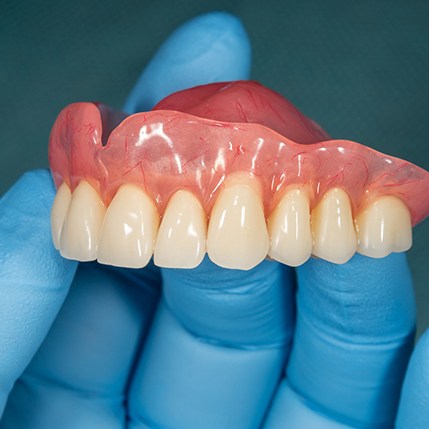
Although dentistry is rapidly advancing, there are only three types of dentures that you can choose from:
Partial Dentures
Consisting of an acrylic, gum-colored base, artificial teeth, and a metal framework, partial dentures work like a puzzle piece. Designed to fill in the spaces left behind by missing teeth, this prosthetic attaches to healthy teeth, allowing it to fit in nicely and successfully recreate a complete, functional, and beautiful smile.
Full Dentures
Crafted much in the same way as partials, full dentures do not contain the metal framework within the acrylic base. Instead, the prosthetics are made to fit snugly in place using natural suction. Many patients also turn to denture adhesive for added protection, especially when eating and/or speaking.
Implant Dentures
While full and partial dentures rely on additional products or healthy teeth to help hold them in place, implant dentures are vastly different. Instead of altering other areas of the mouth to ensure that your tooth replacement is a success, we only need the vacant sockets to position and place each implant post. Made of titanium, they fuse with the jawbone tissues to create a firm and stable foundation.
Benefits of Dentures

Throughout the centuries, individuals have benefited from dentures. While the materials that are used to create them have changed (thankfully) over time, they maintain the same goal – to create complete, healthy smiles.
If you are considering dentures to replace your missing teeth, a few of the advantages you can expect include:
- Greater bite force and chewing power allow you to eat coarser foods.
- Prosthetics that can last up to a decade or longer depending on the type of care you provide.
- Improved confidence in your appearance because of how full and comfortable your smile is.
- A more well-balanced diet.
- Better overall and oral health, as these prosthetics are easy to clean and manage.
Understanding the Cost of Dentures
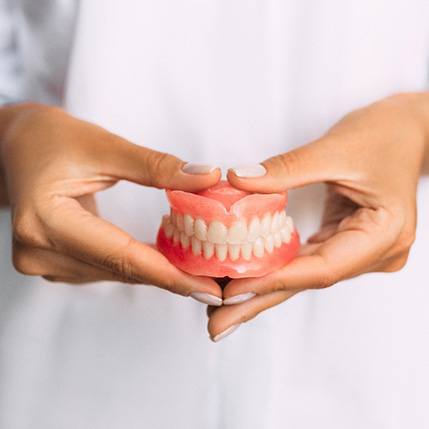
Because your new prosthetics will be as unique as your smile, it is impossible to charge a ‘one size fits all’ price for dentures. The best way to determine the exact cost of dentures is to visit Dr. Bemani for an in-person exam. There, she can go over the perks of certain features, as well as formulate a price quote for these life-changing restorations. In the meantime, feel free to follow the link below to learn more about how we’ll calculate your total once we’ve had the opportunity to evaluate your smile firsthand.
Factors that Affect the Cost of Dentures
Although they may not seem that complex, there are typically three main factors that help determine the cost of dentures. These include:
- Whether the patient needs any preliminary treatment prior to getting their restorations, such as gum disease therapy, tooth extractions, or bone grafting.
- The specific type of acrylic you choose for the base of your dentures. There are a variety of options that can make your prosthetics more durable, hypoallergenic, or meet other special challenges.
- The material used to make the teeth of your denture, which is typically either porcelain or acrylic. Acrylic is generally less expensive than porcelain, however porcelain is more durable and feels more like real teeth.
Keep in mind that while it’s understandable to want to cut costs wherever possible, simply getting the cheapest dentures you can find will likely end up costing you more in the long run, because inferior materials typically require more frequent and expensive repairs!
Are Implant Dentures More Expensive?
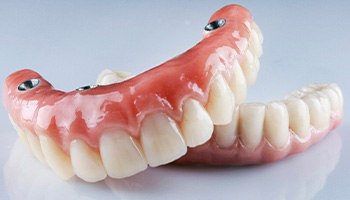
Implant dentures are an excellent way to permanently replace missing teeth, combining the convenience of traditional dentures with the secure hold of dental implants. These dynamic prosthetics also allow you to eat a more expansive diet without the risk of slipping or causing painful sores. Plus, because you won’t need to worry about removing them for cleaning and soaking, they can improve your confidence since they’ll remain securely in place in your mouth around the clock!
While it’s true that implant dentures are more expensive than removable ones, the good news is that these prosthetics generally pay for themselves over time. That’s because unlike traditional dentures, they are subject to much less wear and tear, and since many varieties are only removable by your dentist, they are less likely to break due to being dropped, dry out, or lose their fit over time. In fact, while removable dentures typically need to be replaced every five to seven years, implant dentures can last for decades with proper care!
Does Dental Insurance Cover Dentures?

While it is important to note that all dental insurance plans are different, most will cover around 50% of the cost of traditional dentures. For more information about your specific plan, reach out to your benefits coordinator, check your provider’s app or website, or feel free to contact our friendly dental insurance team and we’ll be happy to help you confirm your coverage.
Other Options for Making Dentures Affordable

At Advance Dental Clinic, we are pleased to be in-network with most PPO dental plans. Additionally, we are proud to welcome flexible financing plans through CareCredit, our preferred third-party lender. With CareCredit, you can split up the balance of your treatment into multiple, low-to-no interest monthly payments that may work better with your budget.
If you’re ready to get started restoring your smile with the help of durable, lifelike dentures, schedule a consultation with Dr. Bemani to learn more about your options.
Denture FAQs
How long will I have to wait to get dentures after my teeth are pulled?
In most cases, the wait between when your teeth are extracted and when you can begin wearing your new dentures in Catonsville is between six and eight weeks. However, the exact amount of time will depend on the type of denture you need.
The wait time allows your gums a chance to heal, as well as any additional time necessary to ensure that your new prosthetics fit properly.
If you’ll be getting implant dentures, you’ll need to wait between four and six months for the implant to permanently fuse with your jawbone via the process of osseointegration.
Do dentures break easily?
While it’s true that dentures near me are durable enough to withstand years of meals, they won’t last forever. Most prosthetics last between five and seven years with a good maintenance routine. Unfortunately, however, accidents can happen, and one of the most common ways people damage their dentures is by dropping them while cleaning, inserting, or removing them.
Dentures can also break or fracture if they don’t fit properly, or if they have tiny defects in their base such as scratches or notches.
Be aware, however, that even if you do take excellent care of your dentures, they will eventually get worn down due to repeated use and stress and will need to be replaced.
What should I do if my dentures break?
The most serious complication with full dentures in Catonsville is known as “prosthesis fracture”, where your dentures break in half. Although this is more common with top dentures, it is also possible with bottom dentures.
The type of break and its cause will naturally impact whether it can be repaired. If you notice your denture has become damaged, call your dentist as soon as possible for help. Depending on how severe the damage is, we may be able to repair it during the same dental visit. In other cases, we may need to send it back to the dental lab or recommend a reline, or you may need to replace the prosthetic completely if it cannot be repaired.
Should I try relining my dentures myself?
In recent years, many patients have attempted to reline their dentures near me themselves after viewing DIY videos on social media. The idea is that you can save time and money by adjusting your prosthetics yourself. In fact, some stores and online retailers now sell at-home denture reline kits for this very purpose.
Unfortunately, however, it isn’t a good idea to try relining your dentures yourself. Only a trained dentist will have a qualified opinion about the best way to fix ill-fitting prosthetics, and if you’re not careful, you could make them fit a lot worse! That’s because it’s extremely difficult to reline a denture on your own, because you lack the necessary outside perspective to see what you’re doing while you perform it. Worse yet, if you do it incorrectly, you can make your dentures extremely painful to wear and may end up needing to replace it altogether if your DIY repairs don’t work.